SCBats develops practical conservation projects that combine field research, habitat stewardship, and public education across the south coast of British Columbia.
Current project areas
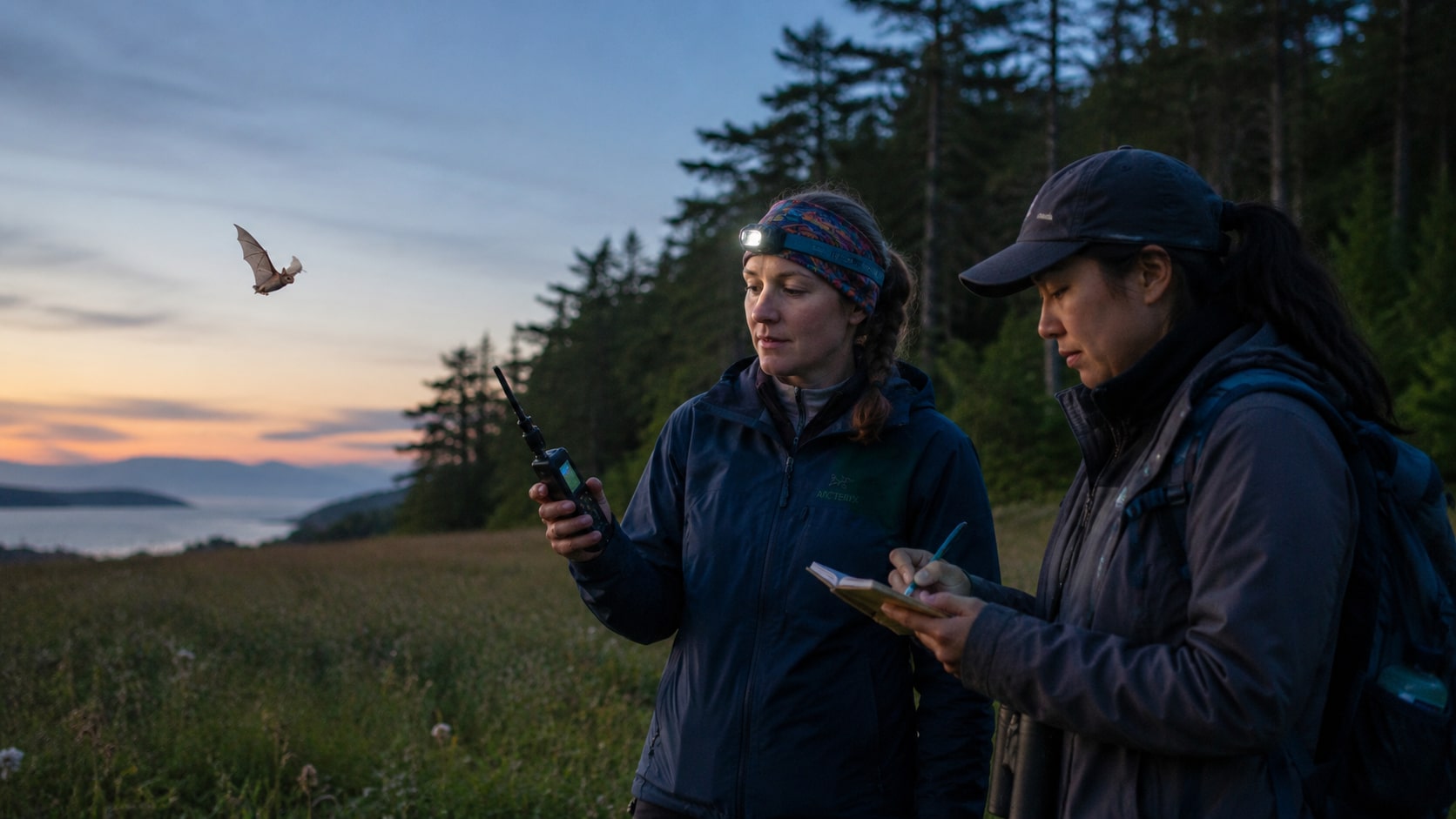
Acoustic monitoring. Seasonal detector surveys help us document which bat species are active in forests, farms, wetlands, and urban edges.
Roost assessments. We work with landowners and community partners to identify maternity roosts, day roosts, and important movement corridors before they are disturbed.
Agricultural stewardship. Bat activity around farms can provide valuable insect control. SCBats helps connect producers with monitoring and bat-friendly habitat practices.
Species documentation. Our records contribute to a better picture of regional distribution, especially for species that are difficult to observe directly.
White-nose syndrome preparedness. Outreach and baseline data collection help communities respond more effectively to disease-related declines.
How projects are built
Most SCBats projects begin with a local conservation question, then combine site visits, detector data, visual surveys, and collaboration with landowners, parks staff, and regional bat programs.
Results from these projects support better decisions about exclusion timing, habitat retention, restoration priorities, and public education materials.
Looking ahead
Future work may expand survey coverage in coastal communities, strengthen bat-friendly farm practices, and improve access to plain-language conservation guidance for residents.