Bat records help conservationists understand where species occur, which habitats are most important, and where more survey effort is needed.
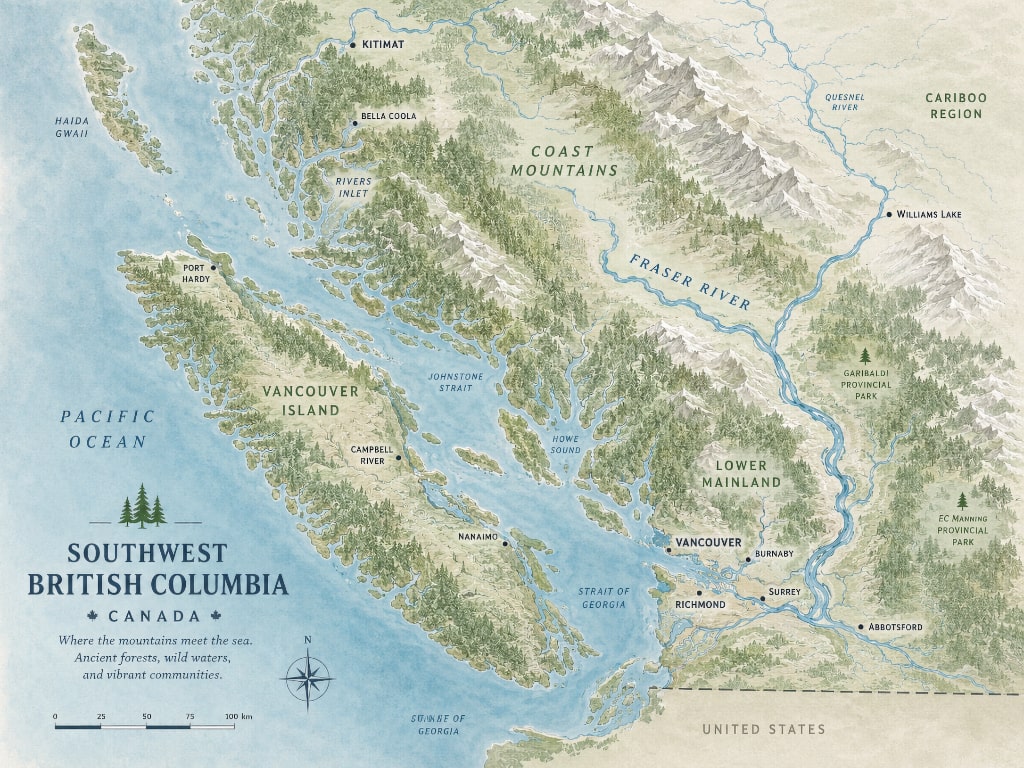
What a bat map can show
Regional maps are useful for identifying maternity roost areas, migration corridors, water-associated feeding habitat, and places where acoustic monitoring has already been completed.
How to use observations
Good records usually include the location, date, time, habitat type, and whether the observation involved a roost, a flight path, feeding activity, or a grounded bat.
Photos, detector recordings, and field notes all improve the value of a record and can help distinguish between similar species.
Why mapping matters
As development pressure increases and white-nose syndrome spreads, consistent mapping can help prioritize outreach, stewardship, and future survey work.
For species descriptions and regional context, visit the Bats of BC section.