Watch the sky around 9 p.m. in July and you'll probably miss them. Bats don't announce themselves. They just appear, stitch a few loops over the yard, and vanish again. British Columbia has a lot of them — more than most people who live here would ever guess. They eat their weight in insects on a good night, and a small bat society spends its summers counting them, protecting the barns and cliffs they sleep in, and reminding the rest of us that bats in BC are worth a second look.
Part of why the province works so well for bats is the sheer variety of it. Coastline, old growth, dry grassland, mountain — you can drive through all of it before dinner. Researchers love that, and honestly, plenty of them clock out from a night of surveys the same way anyone else unwinds, maybe an hour of online casino games before bed. The variety cuts both ways, though. Logging chews up roosts. Cities keep spreading. And a fungal disease, white-nose syndrome, has been creeping west for years now.
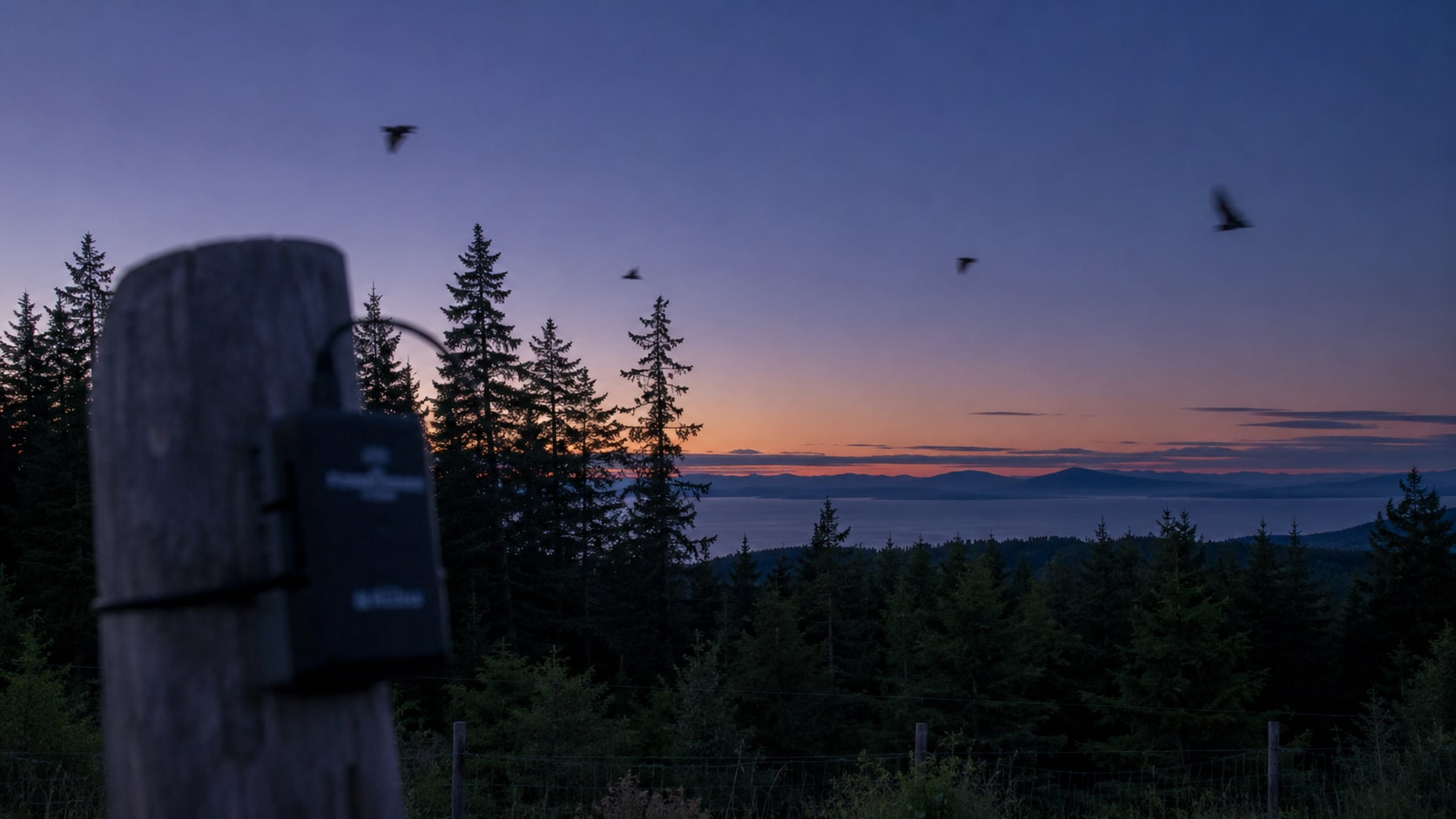
Here's the part that surprised me. Regular people do a lot of this work. They call in roost sightings, let researchers strap acoustic monitors to a fence post on their property, show up to evening walks in bug spray and rubber boots. It stopped being a biologist's job a while ago.
"People are surprised how quickly they start noticing bats once someone points out where to look," one longtime volunteer monitor said during a coastal survey season.
Getting to Know the Bat Species That Call BC Home
The animals themselves are the hook for most people. There are more kinds than you'd think, and they don't behave alike. One tucks into loose tree bark. Another wants a rock face, or the rafters of an old shed. A couple won't overwinter anywhere but a cave. Once you know even a few of them, a summer evening outside reads differently.
Some of the bc bat species you're most likely to hear about:
- Little brown myotis, still one of the most widespread bats around
- Big brown bat, the one turning up in barns and attics
- Yuma myotis, rarely far from a river or a pond
- Silver-haired bat, a migrator that hugs forest edges
- California myotis, smaller, partial to the dry interior
- Townsend's big-eared bat, unmistakable once you clock the ears
- Hoary bat, big, and a loner
| Species | Typical Habitat | Roost Type | Conservation Status |
|---|---|---|---|
| Little brown myotis | Forests, wetlands | Buildings, trees | At risk |
| Big brown bat | Urban and rural areas | Buildings, crevices | Stable |
| Townsend's big-eared bat | Caves, old mines | Caves | Sensitive |
| Hoary bat | Coniferous forests | Foliage | Data limited |
You don't have to name them to enjoy them. But it helps. It's the difference between "a bat" and "oh, that's a big brown, they nest under the neighbour's eaves" — familiar faces on a street you thought you knew.
Inside the Work of a Local Bat Society
Picture a shoestring operation. A few biologists, a rotating cast of volunteers, some very committed local naturalists, and a budget that has to cover an area the size of a small country. Most of the year runs on a rhythm set by the bats, not the calendar — what gets done depends on where the animals are in their cycle.
| Season | Main Activity |
|---|---|
| Spring | Emergence counts begin, roost checks resume |
| Summer | Peak monitoring, public education events |
| Fall | Migration tracking, exclusion guidance for homeowners |
| Winter | Hibernation surveys, data analysis and reporting |
Then there's the phone. A lot of the job is fielding calls from people who've found bats in the attic and want them gone yesterday. The answer is almost never a quick eviction. Staff walk homeowners through timing instead, because pull the wrong week and you strand pups too young to fly. It's slow, unglamorous, and it's how the trust gets built.
Roughly, a year in the life of a bat society looks like this:
- Coordinating volunteer-run emergence counts at known roost sites
- Running acoustic monitoring stations to track species presence
- Offering guidance on safe, humane bat exclusion from buildings
- Partnering with landowners to protect roosting habitat
- Hosting public education events and evening bat walks
- Submitting population data to regional and national databases
- Applying for grants to fund ongoing research projects
Simple Ways Residents Can Support Bats in BC
None of this needs a degree or a kit. The dead tree at the back of the lot? Leave it standing if it's safe — that peeling bark is prime real estate. The floodlight you leave on all night? Bats hate it. Bright light near a roost throws off when they feel safe enough to head out, so dim it, aim it away, or put it on a timer.
"Every bat box installed correctly is a small vote of confidence in the local ecosystem," a regional stewardship coordinator said during a community workshop.
And report what you see. Even a casual "there's a colony in our barn" email is useful — those notes fill in the blank spots that formal surveys can't reach, especially out in rural areas nobody's funded to survey. Over the years, that scattered citizen input has turned into one of the better ways to spot when something's shifting.
Winding Down After a Night of Bat Watching
There's a specific kind of tired that comes from standing in a field at dusk, neck craned, counting shapes against a purple sky. The good kind. You head home with nothing left on the list. Some people read on the porch a while longer. Others just flop down and put on whatever switches the brain off. However you land it, going from watching wild animals to a quiet evening in is a decent way to end a day that started with curiosity.
Bats get a bad rap in BC — always have. But it's a hard reputation to hold onto once you actually learn the first thing about them. Between the ongoing grind of a local bat society and a hundred small choices made by people who'll never call themselves conservationists, the province keeps inching toward somewhere these animals can do more than just hang on.